
ASR pool rebuild planning: what was removed, what was saved, and why it mattered.
A partial-demolition example for Austin-area homeowners comparing patch, repair, partial rebuild, full rebuild, plumbing decisions, isolation details, soil stabilization, and new shotcrete mix choices.
The planning question.
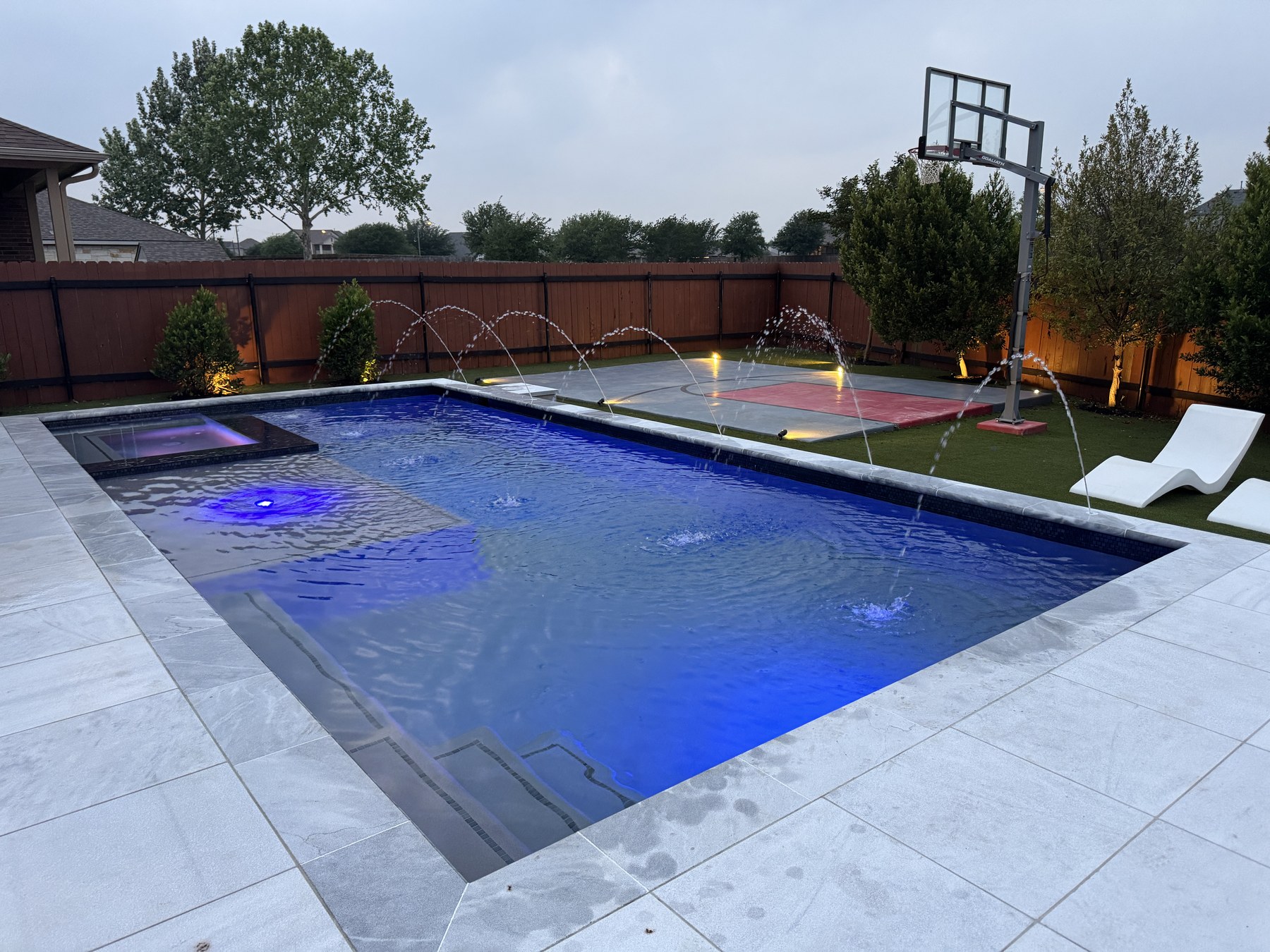
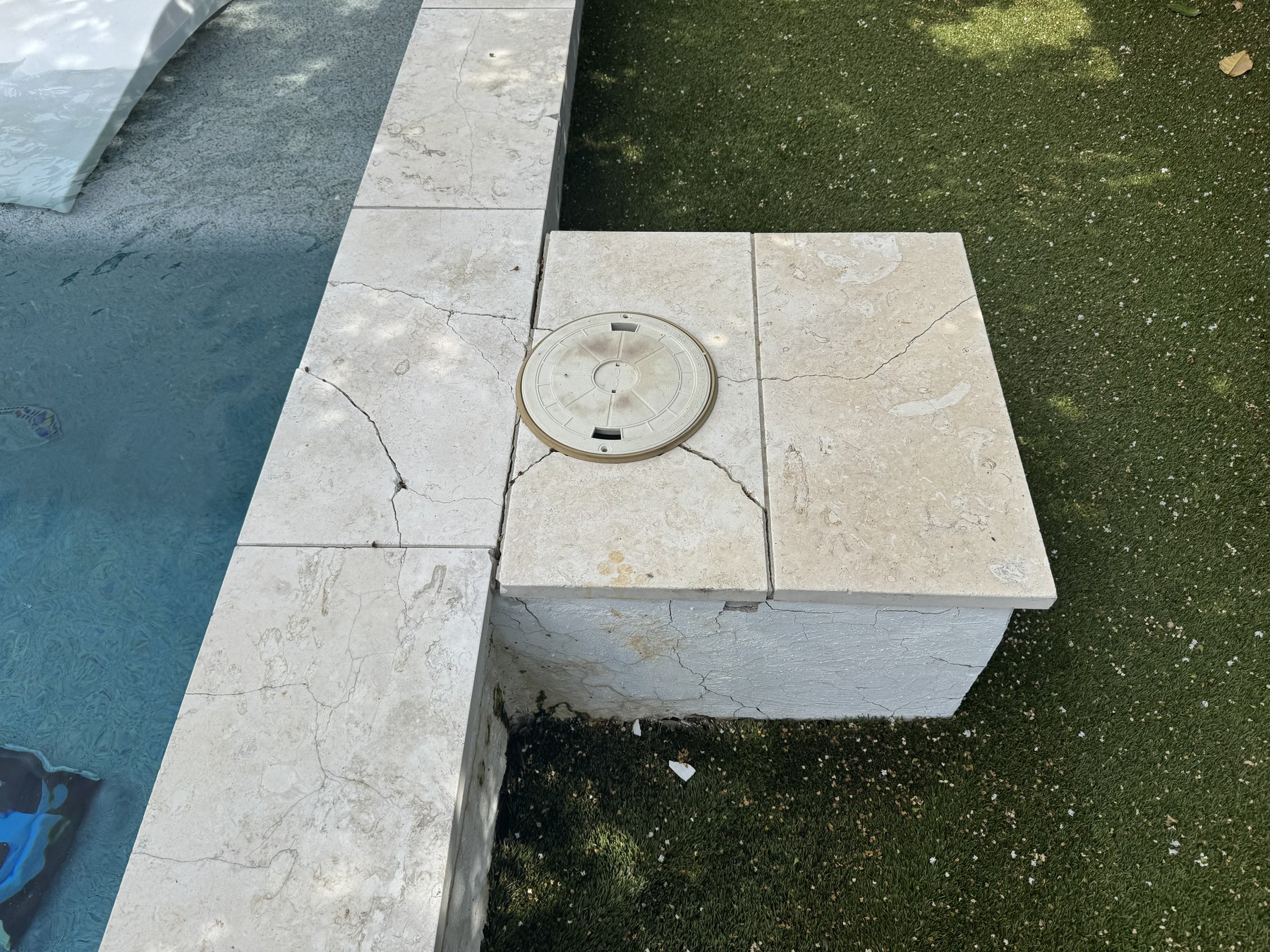
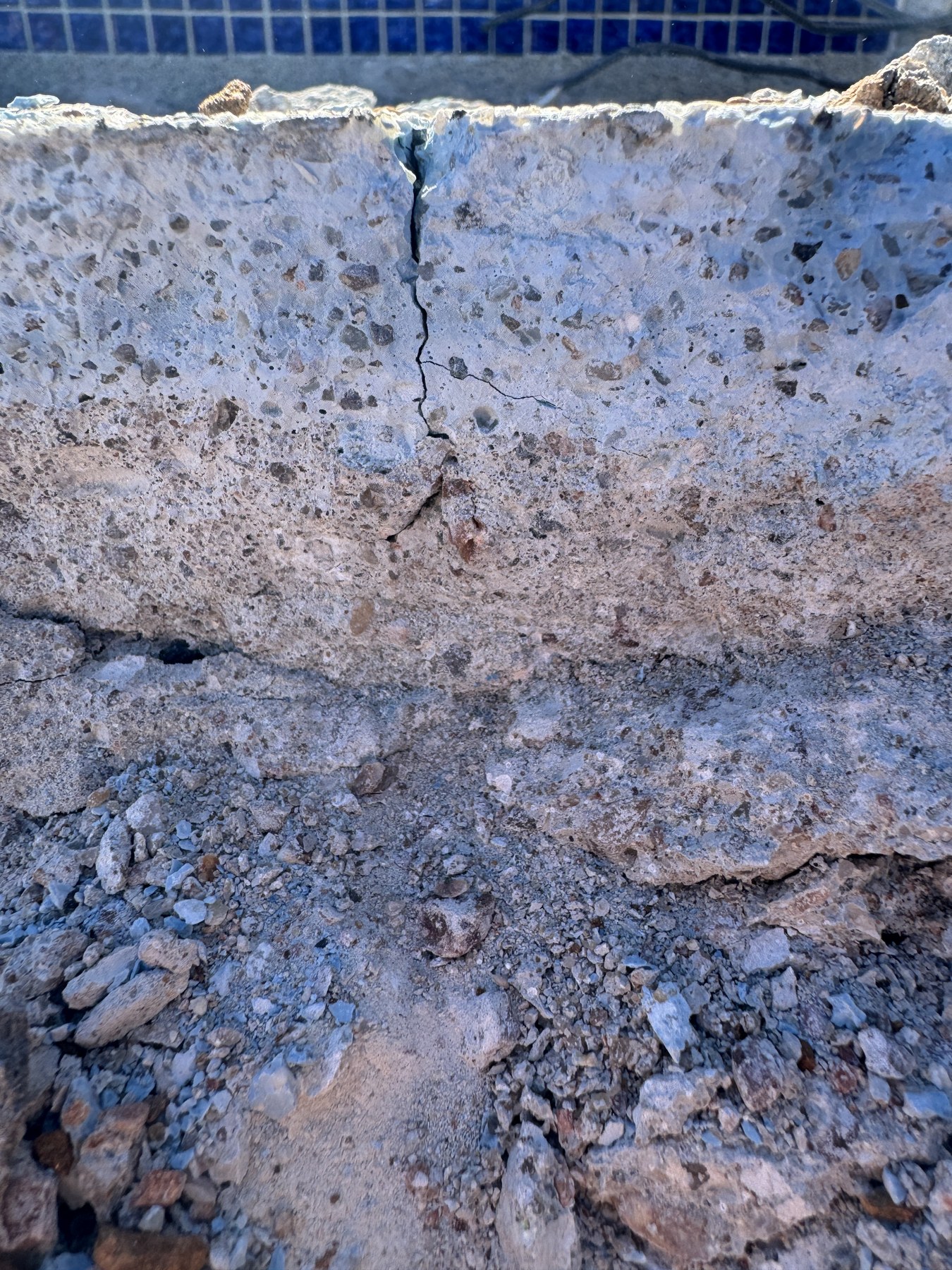
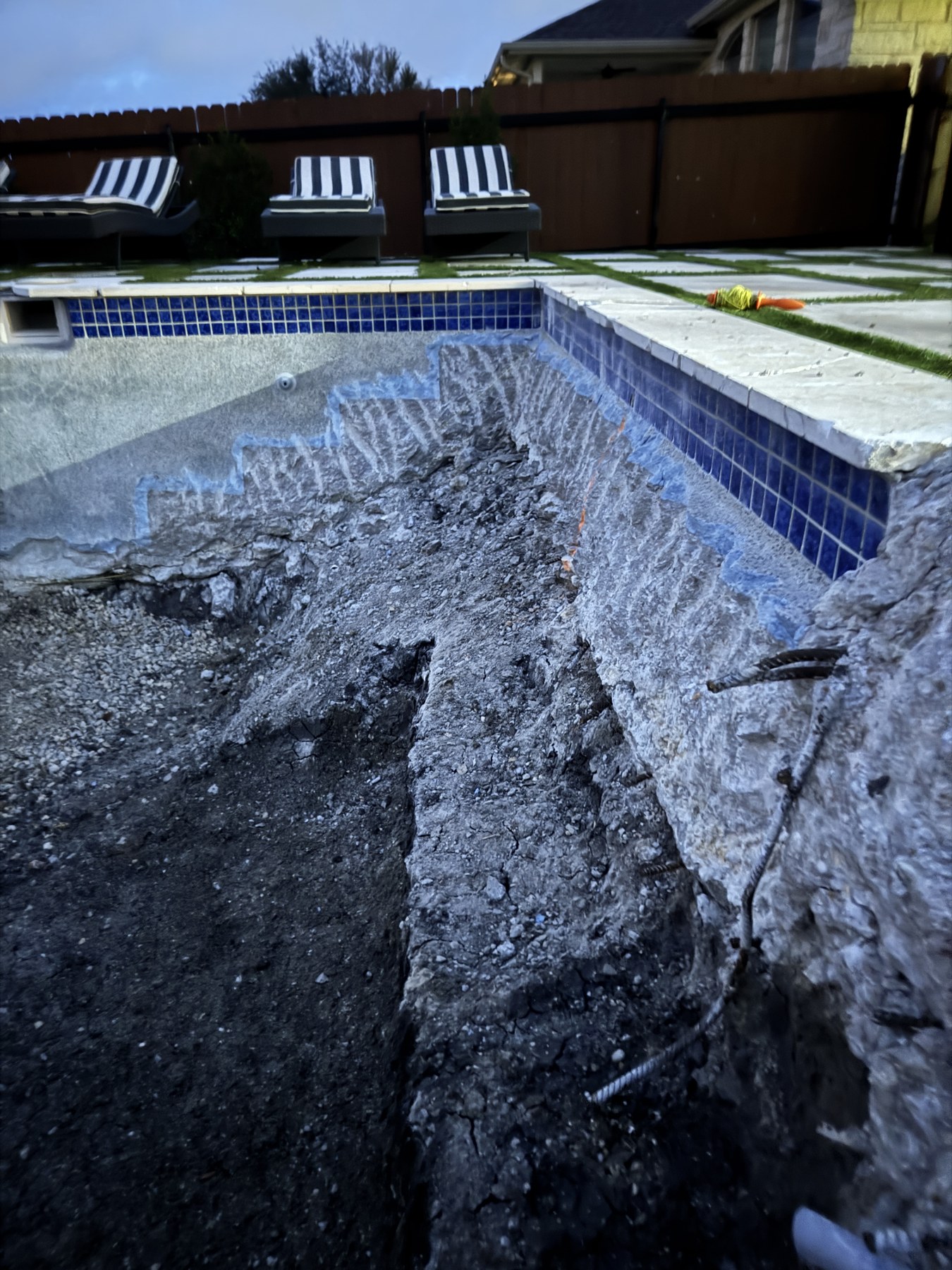
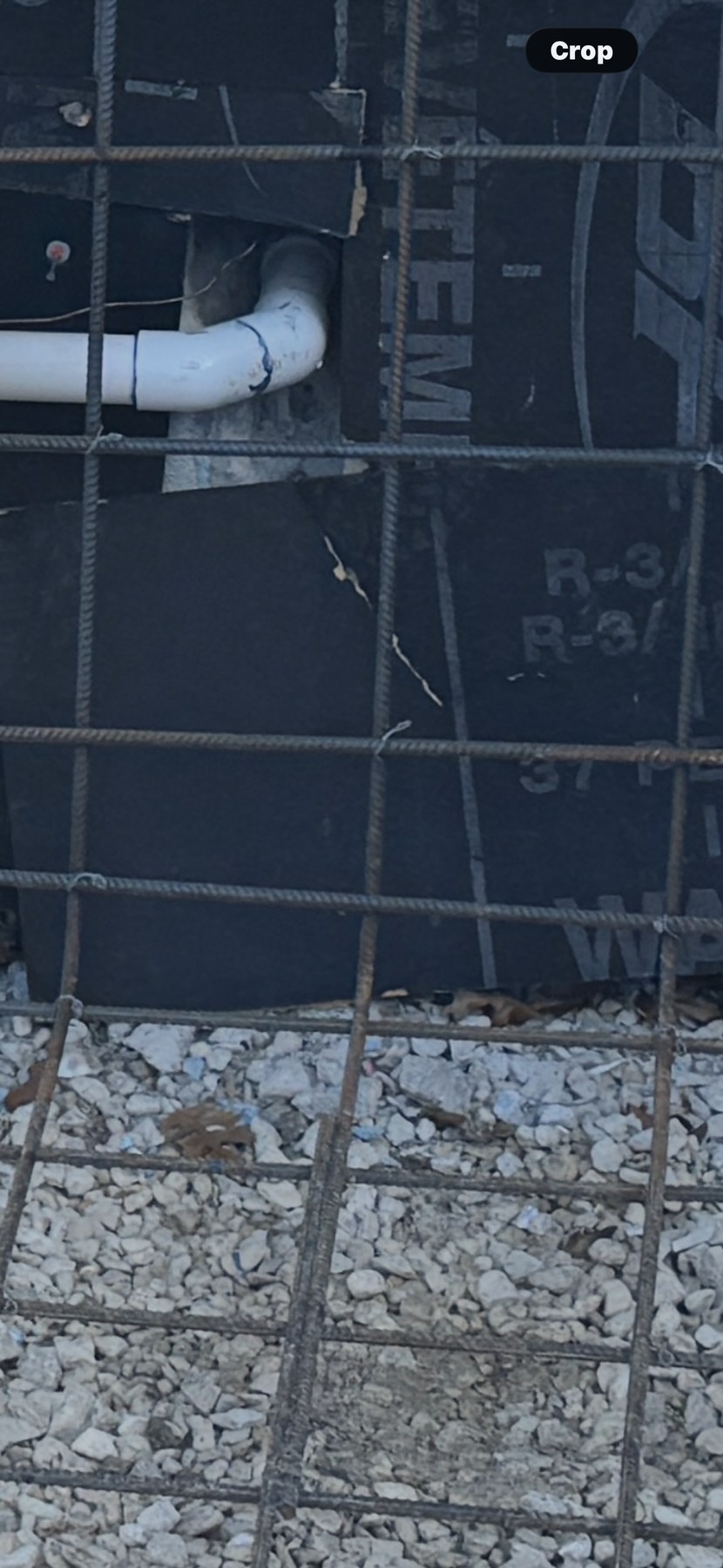
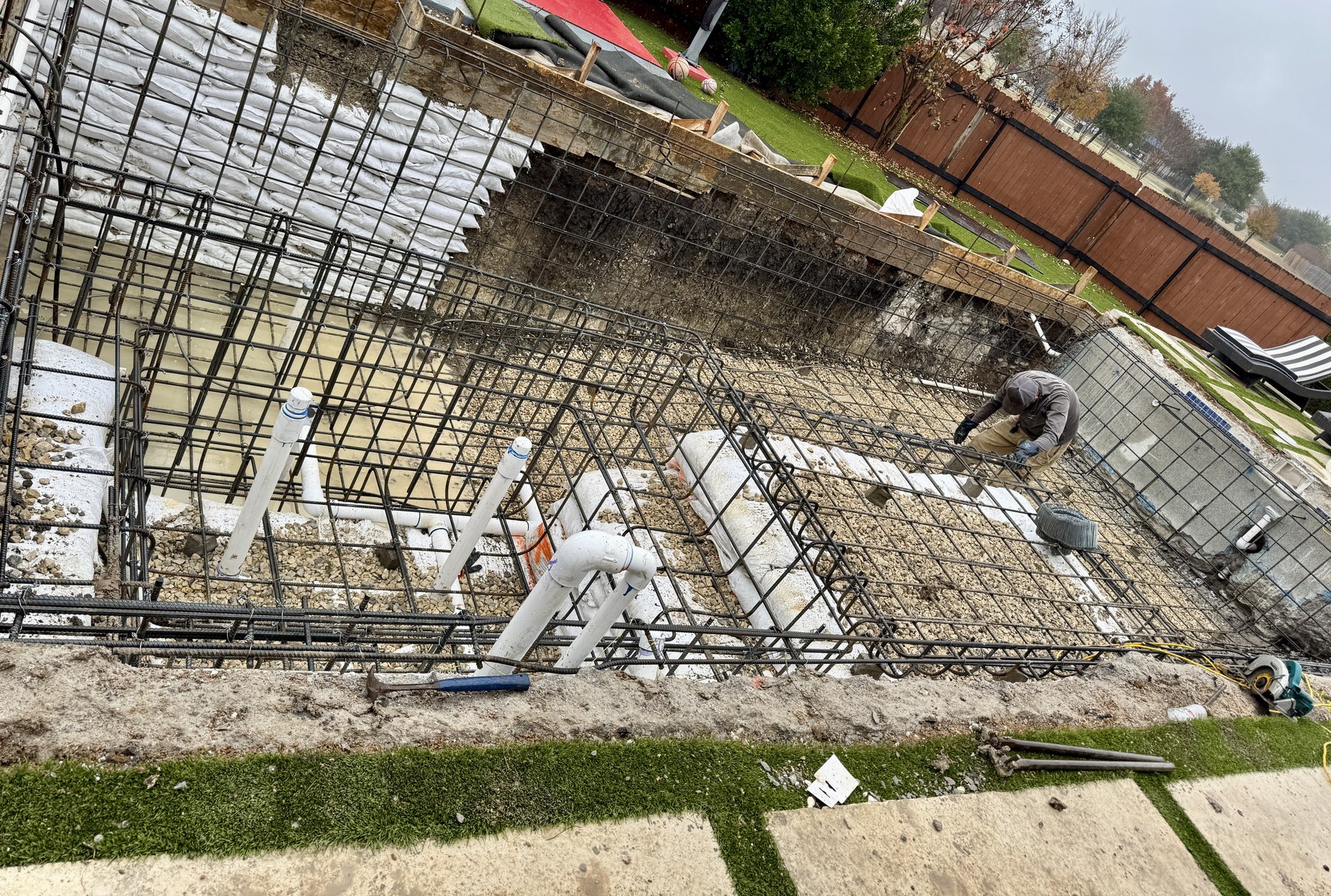
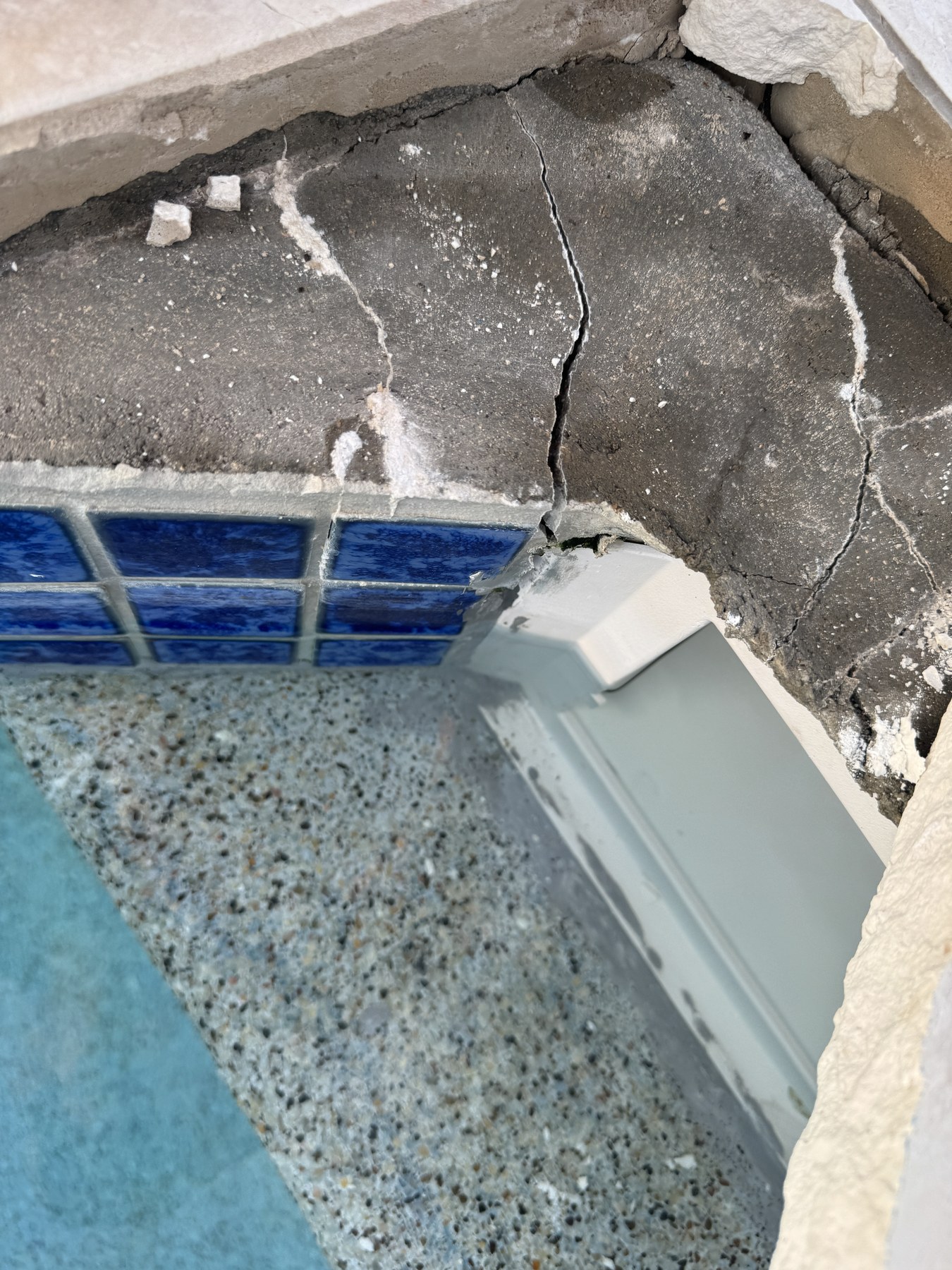
When a pool shell shows ASR-related distress, the decision is not always as simple as “patch it” or “tear everything out.” This partial-demolition example shows the kind of documentation and planning homeowners need before committing to a rebuild: visible cracking, skimmer movement, selective demolition, pressure-tested plumbing decisions, isolation details, soil stabilization, and one finished pool rebuilt with a mix selected around ASR risk. It is an example of a documented decision path, not a universal repair promise.
Photos can document symptoms and construction decisions, but they do not diagnose ASR by themselves. Testing, engineering, lab review, and repair responsibility should be handled by the appropriate qualified professionals.
Partial-demo and rebuild documentation.
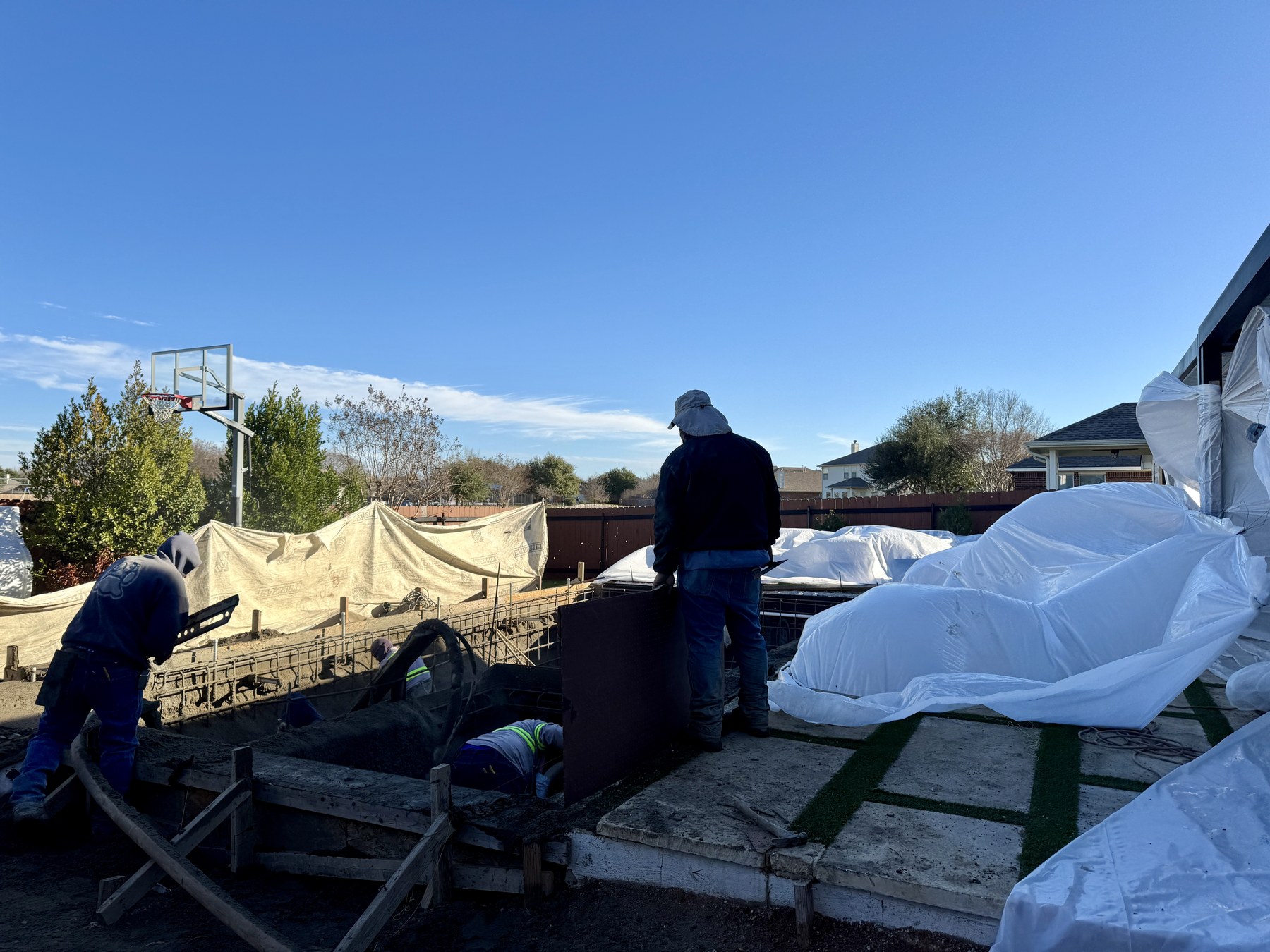
What the example preserves.
Removed material
Damaged shell areas and horizontal plumbing through the walls were removed where the rebuild plan needed separation from known distress.
Saved material
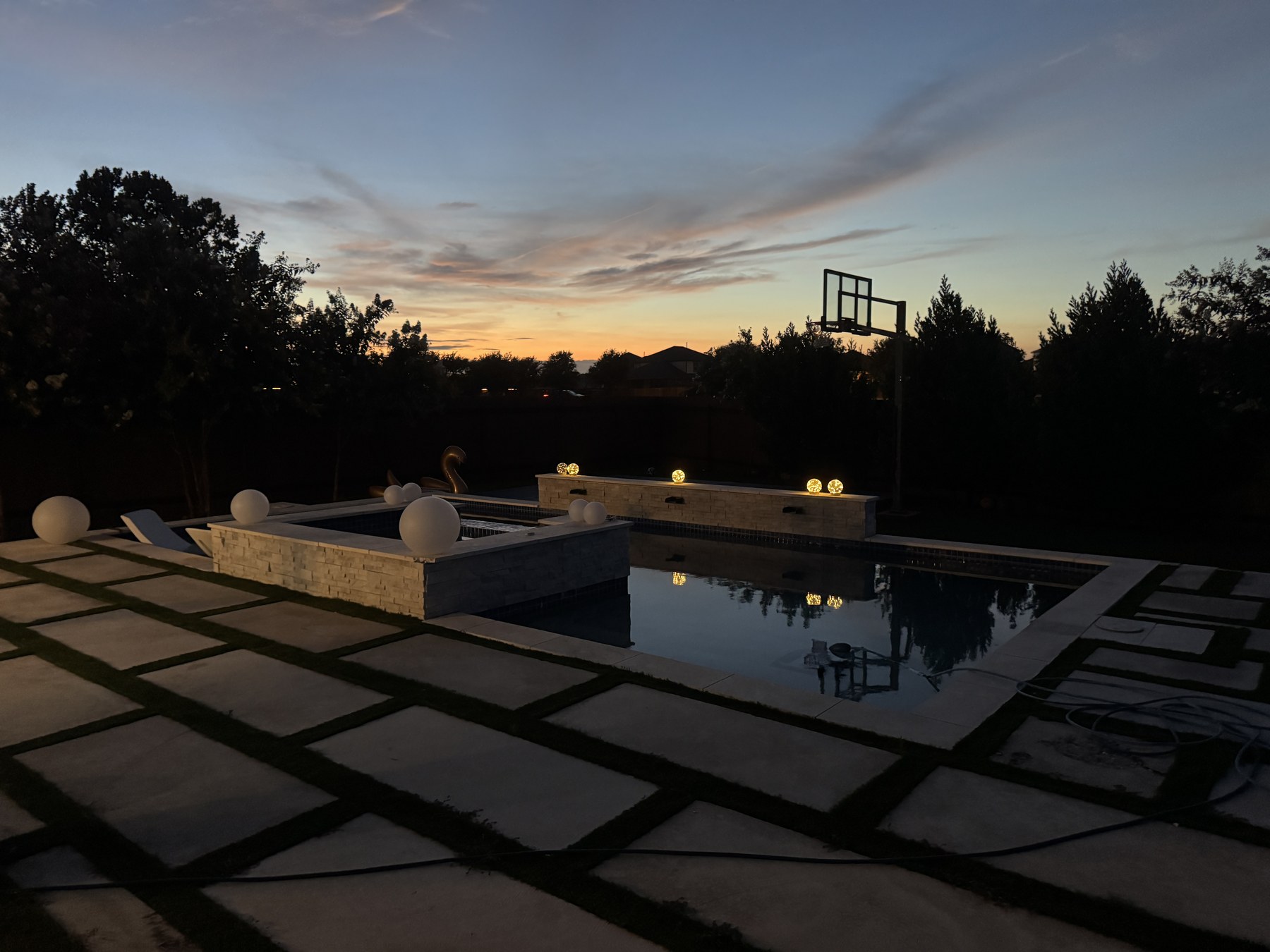
Two walls and straight-through pipe penetrations were kept only where that made sense, could be pressure tested, and could be isolated from future concrete movement.
Why it mattered
The value was not just the finished pool. It was the documented decision path: what failed, what stayed, what was isolated, what was tested, and what was rebuilt with a mix selected around ASR risk.
A note on boundaries.
This page is construction planning context, not a diagnosis from photos. BuildAdvocate can help a homeowner work with existing trades or bring in appropriate trade partners for a defined scope, but lab testing, petrographic review, engineering, legal advice, insurance-claim representation, and trade work should be handled by the appropriate qualified professionals. Those professionals remain responsible for their own work, pricing, licensing, insurance, warranties, code compliance, and opinions.